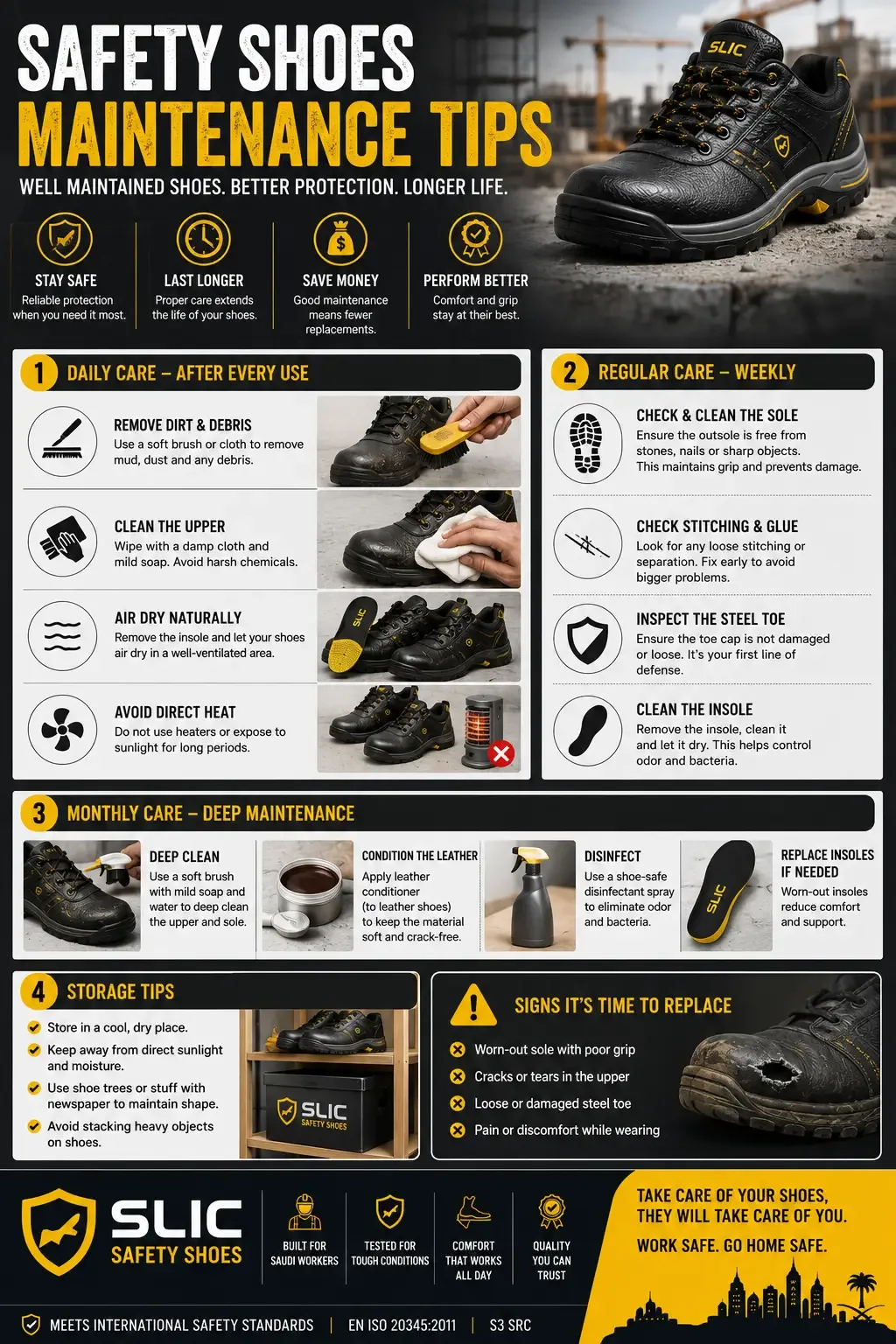
Extend Footwear Life: The Ultimate Safety Shoes Maintenance Tips
Safety shoes are a vital part of personal protective equipment (PPE), protecting workers from workplace hazards such as falling objects, sharp materials, slippery surfaces, and electrical risks. However, even the highest-quality footwear can lose its protective performance if it is not properly maintained. Following the right safety shoes maintenance tips helps extend the lifespan of your footwear, improves comfort, and ensures it continues to provide reliable protection on the job.
Whether you work in construction, manufacturing, logistics, oil and gas, or warehousing, proper care and regular inspections can save money by reducing the need for frequent replacements. In this guide, you'll discover practical safety shoes maintenance tips for cleaning, drying, storing, inspecting, and caring for your footwear so it remains safe, durable, and ready for everyday use.
Why Maintenance Matters as Much as Buying
Investing in high-quality safety footwear is only the first step toward protecting your feet at work. Without proper care, even the best safety shoes can lose their protective features, become uncomfortable, and wear out much sooner than expected. Following the right safety shoes maintenance tips helps preserve both the safety and performance of your footwear throughout its lifespan.
Safety Features Can Deteriorate Over Time
Daily exposure to heavy loads, rough surfaces, moisture, chemicals, dust, and extreme temperatures can gradually damage safety shoes. Worn-out soles, damaged stitching, cracked leather, or compromised toe caps may reduce the level of protection the shoes were designed to provide.
Regular maintenance helps identify these issues early, allowing you to repair or replace your footwear before it becomes a safety risk.
Proper Care Extends Shoe Lifespan
Safety shoes are an investment, and routine maintenance helps maximize that investment. Cleaning dirt, removing debris, drying shoes correctly, and storing them in suitable conditions can significantly reduce wear and tear.
With consistent care, workers and businesses can extend the usable life of their footwear and reduce replacement costs.
Comfortable Shoes Improve Workplace Performance
Dirty, damaged, or poorly maintained shoes often become less comfortable over time. Flattened insoles, worn-out cushioning, and trapped moisture can cause foot fatigue, discomfort, and even blisters during long shifts.
Keeping safety shoes clean and well-maintained helps preserve their cushioning, support, and overall comfort, allowing workers to stay productive throughout the day.
Regular Inspections Help Prevent Workplace Accidents
Maintenance is not just about cleaning—it also includes routine inspections. Checking your shoes for worn soles, loose stitching, damaged laces, exposed steel toe caps, or reduced slip resistance can help prevent accidents before they occur.
Replacing damaged footwear at the right time ensures workers continue to receive the protection their job requires.
Maintenance Saves Money in the Long Run
Replacing safety shoes more frequently than necessary increases operating costs for both individuals and businesses. A simple maintenance routine can delay premature wear, reducing long-term expenses without compromising worker safety.
For companies managing large workforces, proper footwear maintenance can contribute to lower procurement costs and more consistent PPE performance.
Protect Your Investment
Buying certified safety shoes is important, but maintaining them is equally essential. By following practical safety shoes maintenance tips, workers can keep their footwear clean, comfortable, and effective while ensuring it continues to provide reliable protection in demanding work environments.
Regular care not only extends the life of safety shoes but also helps maintain workplace safety, improve comfort, and deliver better value over time.
Daily Routine After Every Shift
A few minutes of care at the end of each workday can make a significant difference in the lifespan and performance of your footwear. Developing a simple daily routine helps prevent dirt buildup, reduces odor, protects the shoe materials, and ensures your footwear remains ready for the next shift. These safety shoes maintenance tips are easy to follow and require minimal time.
Remove Dirt and Debris
After each shift, brush off loose dirt, mud, dust, and small stones from the upper and outsole. Debris trapped in the tread can reduce grip and accelerate wear, while accumulated dirt may damage the shoe material over time.
A soft brush or damp cloth is usually enough for routine cleaning.
Wipe Down the Exterior
Use a clean, damp cloth to wipe the surface of your safety shoes. This removes dust, oils, and light stains before they become difficult to clean.
For leather safety shoes, avoid excessive water and use products specifically designed for leather care whenever necessary.
Air Dry Properly
If your shoes become wet from rain, sweat, or workplace conditions, allow them to air dry naturally in a well-ventilated area.
Avoid placing safety shoes near direct heat sources such as heaters, radiators, or open sunlight for extended periods, as excessive heat can cause leather to crack, adhesives to weaken, and synthetic materials to warp.
Remove and Dry Insoles
If the insoles are removable, take them out after work to improve airflow and speed up drying. This helps reduce moisture buildup, minimizes unpleasant odors, and creates a healthier environment inside the shoes.
Check for Visible Damage
Spend a minute inspecting your footwear before storing it. Look for signs such as:
-
Worn or damaged soles
-
Loose stitching
-
Cracks in the upper
-
Damaged eyelets or laces
-
Exposed steel toe caps
-
Separation between the sole and upper
Identifying these problems early allows you to repair or replace your shoes before they become a safety concern.
Store Shoes Correctly
Place your safety shoes in a cool, dry, and well-ventilated location. Avoid leaving them inside hot vehicles, damp storage rooms, or areas exposed to direct sunlight for long periods.
Proper storage helps preserve the shape, materials, and protective features of the shoes.
Make Daily Maintenance a Habit
Consistent daily care requires only a few minutes but can greatly improve the durability, comfort, and performance of your footwear. Following these safety shoes maintenance tips after every shift helps ensure your safety shoes remain clean, reliable, and ready to protect you on the job every day.
How to Clean Safety Shoes by Material Type
Not all safety shoes should be cleaned the same way. Different materials require different care techniques to maintain their appearance, comfort, and protective performance. Using the wrong cleaning method can shorten the life of your footwear or even damage important safety features. These safety shoes maintenance tips will help you clean each material correctly.
Leather Safety Shoes
Leather is durable and long-lasting, but it needs regular care to prevent drying and cracking.
How to clean:
-
Remove loose dirt with a soft brush.
-
Wipe the surface using a damp cloth.
-
Use a mild leather cleaner for stubborn stains.
-
Allow the shoes to air dry naturally.
-
Apply a quality leather conditioner periodically to keep the leather soft and flexible.
Avoid:
-
Soaking leather in water
-
Using harsh detergents or bleach
-
Drying near heaters or direct sunlight
Synthetic Safety Shoes
Synthetic materials are generally lightweight and easier to maintain than leather.
How to clean:
-
Remove dirt with a soft brush.
-
Wash using warm water and mild soap.
-
Wipe with a clean cloth.
-
Let the shoes air dry completely before wearing them again.
Synthetic shoes usually require less maintenance but should still be cleaned regularly to prevent dirt buildup.
Nubuck and Suede Safety Shoes
Nubuck and suede provide a premium appearance but require more delicate care.
How to clean:
-
Use a suede or nubuck brush to remove dust and dirt.
-
Clean stains with a specialized suede eraser or cleaner.
-
Brush gently to restore the texture after cleaning.
Avoid:
-
Excessive water
-
Liquid detergents
-
Standard leather polish
Too much moisture can permanently damage the surface.
Mesh and Fabric Safety Shoes
Many modern safety shoes include breathable mesh panels for improved ventilation.
How to clean:
-
Brush away loose dirt.
-
Wipe with a cloth using mild soapy water.
-
Rinse lightly with a damp cloth if needed.
-
Allow the shoes to air dry in a ventilated area.
Keeping mesh clean helps maintain breathability and reduces odor buildup.
Rubber Soles and Outsoles
The outsole provides traction and stability, making regular cleaning essential.
How to clean:
-
Remove stones and debris lodged in the tread.
-
Scrub the sole with a soft brush and mild soap.
-
Rinse with a damp cloth.
-
Dry thoroughly before the next use.
Clean outsoles help maintain slip resistance and improve overall workplace safety.
Cleaning Products to Avoid
Some cleaning products can damage shoe materials or reduce their durability. Avoid using:
-
Bleach
-
Strong solvents
-
Harsh chemical cleaners
-
Abrasive brushes
-
High-pressure water sprays
These products may weaken adhesives, discolor materials, or reduce the lifespan of your safety footwear.
Use the Right Cleaning Method Every Time
Matching the cleaning method to the shoe material helps preserve comfort, appearance, and protective performance. By following these safety shoes maintenance tips, you can keep your safety shoes in excellent condition and ensure they continue to provide dependable protection throughout their service life.
safety shoes maintenance tips
Safety shoes are designed to protect your feet from workplace hazards, but their effectiveness depends on proper care. Following the right safety shoes maintenance tips helps preserve important safety features, improve comfort, and extend the lifespan of your footwear. Whether you work in construction, manufacturing, warehousing, logistics, or oil and gas, regular cleaning, inspection, and proper storage can keep your safety shoes performing at their best while reducing replacement costs.
This guide covers practical safety shoes maintenance tips, including daily care routines, material-specific cleaning methods, proper drying techniques, storage recommendations, and signs that indicate it's time to replace your safety shoes.
Signs It's Time to Replace Your Safety Shoes
Even with proper care, safety shoes do not last forever. Daily exposure to heavy loads, rough surfaces, moisture, chemicals, and extreme temperatures gradually reduces their protective performance. One of the most important safety shoes maintenance tips is knowing when repairs are no longer enough and replacement is the safer option.
Replacing worn-out safety shoes at the right time helps maintain workplace safety, reduces the risk of injury, and ensures continued comfort during long shifts.
Worn-Out Outsoles
The outsole provides grip and stability on different surfaces. If the tread becomes smooth or uneven, the shoes may no longer offer adequate slip resistance, increasing the risk of slips and falls.
Replace your safety shoes if you notice:
-
Smooth or flattened tread patterns
-
Uneven sole wear
-
Cracks in the outsole
-
Reduced traction on wet or oily surfaces
Exposed or Damaged Steel Toe Cap
The steel toe cap is the primary protective feature of the shoe. If it becomes exposed, dented, loose, or damaged after a heavy impact, it may no longer provide the intended level of protection.
Inspect the toe area regularly and replace the shoes if the protective cap has been compromised.
Sole Separation
Over time, the adhesive or stitching that joins the outsole to the upper may begin to fail.
Watch for signs such as:
-
Gaps between the sole and upper
-
Peeling edges
-
Loose sections of the outsole
Once separation begins, the shoe's durability and safety can quickly decline.
Cracked or Torn Upper Material
Leather, synthetic materials, and fabric uppers can develop cracks, tears, or holes through daily wear.
Damaged uppers may:
-
Allow water and debris inside
-
Reduce structural support
-
Lower overall protection
If the damage is extensive, replacing the shoes is the safest solution.
Loss of Cushioning and Support
Over time, insoles and midsoles compress and lose their ability to absorb shock.
Common signs include:
-
Foot fatigue after short periods
-
Reduced cushioning
-
Poor arch support
-
Increased heel or knee discomfort
If replacing the insoles does not restore comfort, it may be time for new safety shoes.
Persistent Odors or Moisture Problems
While regular cleaning can eliminate most odors, persistent smells or shoes that remain damp despite proper drying may indicate internal material deterioration or bacterial growth.
When hygiene and comfort cannot be restored, replacement is often the best option.
Failed Safety Features
Additional protective features can also wear out over time, including:
-
Slip-resistant outsoles
-
Anti-static protection
-
Electrical hazard protection
-
Puncture-resistant midsoles
-
Waterproof membranes
If these features no longer perform as intended, the shoes may not provide the level of protection required for your workplace.
Age and Heavy Daily Use
Even if safety shoes still look acceptable, years of continuous use can weaken hidden components such as adhesives, cushioning materials, and internal support structures.
Workers in demanding industries should inspect their footwear regularly and replace it whenever safety or comfort begins to decline.
Don't Wait Until They Fail
One of the most valuable safety shoes maintenance tips is to replace footwear before it becomes a safety hazard. Regular inspections, combined with timely replacement, help ensure your safety shoes continue to provide the protection, stability, and comfort needed for demanding work environments.
Saudi-Specific Challenges for Safety Shoe Maintenance
Saudi Arabia's working environment presents unique conditions that can accelerate wear and tear on safety footwear. High temperatures, fine desert dust, and demanding industrial worksites require workers to pay extra attention to shoe care. Following safety shoes maintenance tips that are suited to the local climate helps maintain protection, improve comfort, and extend the lifespan of your footwear.
Extreme Heat
Many workers spend long hours outdoors, where pavement, concrete, and metal surfaces can become extremely hot. Prolonged exposure to high temperatures can gradually affect the shoe's materials, including leather, synthetic uppers, adhesives, and rubber outsoles.
To minimize heat-related damage:
-
Store shoes in a cool, shaded area after work.
-
Never leave them inside a parked vehicle for extended periods.
-
Allow shoes to cool naturally before cleaning or storing them.
Dust and Sand Accumulation
Construction sites, industrial facilities, and desert environments expose safety shoes to large amounts of dust and sand. Fine particles can collect inside the shoe, clog breathable materials, and become trapped in the outsole tread, reducing comfort and grip.
A quick brushing after each shift helps remove accumulated dust and keeps the shoes performing as intended.
Sweat and Moisture Build-Up
Although Saudi Arabia has a hot climate, long working hours often lead to excessive perspiration inside safety shoes. Trapped moisture can create unpleasant odors, encourage bacterial growth, and shorten the life of insoles and lining materials.
To reduce moisture:
-
Allow shoes to air dry after every shift.
-
Remove the insoles whenever possible.
-
Wear moisture-wicking work socks.
-
Rotate between two pairs of safety shoes if you work daily.
Exposure to Oil and Industrial Chemicals
Workers in manufacturing, automotive, oil and gas, and heavy industries may regularly encounter oils, fuels, lubricants, and chemicals. If these substances remain on the shoes, they can gradually damage the upper materials and reduce outsole performance.
Clean contaminated footwear promptly using the cleaning method recommended by the manufacturer, and inspect the shoes for signs of chemical damage.
UV Exposure
Strong sunlight can dry out leather, fade colors, and weaken certain materials over time. Continuous ultraviolet (UV) exposure may also reduce the flexibility of some synthetic components.
Keeping shoes out of direct sunlight during storage helps preserve their appearance and durability.
Choose Maintenance That Matches Your Environment
The demanding climate and industrial conditions in Saudi Arabia make regular footwear care even more important. By adapting your safety shoes maintenance tips to local environmental challenges, you can extend the life of your safety shoes, maintain their protective features, and ensure they continue to perform reliably in some of the region's toughest workplaces.
Essential Maintenance Products for Safety Shoes
Using the right care products can help keep your safety footwear clean, comfortable, and protective for longer. While regular cleaning and inspections are important, quality maintenance products make the process more effective and help prevent premature wear. These safety shoes maintenance tips include the essential products every worker should consider.
Soft Cleaning Brush
A soft-bristle brush is one of the most useful tools for routine maintenance. It removes dust, mud, sand, and debris without scratching leather or damaging synthetic materials.
Use it after every shift to clean:
-
Uppers
-
Stitching
-
Outsoles
-
Tread grooves
Microfiber Cloth
A microfiber cloth is ideal for wiping away dirt, moisture, and light stains. It is gentle on all common safety shoe materials and leaves the surface clean without causing scratches.
Keep one cloth for routine cleaning and another for applying conditioners or protective products.
Mild Shoe Cleaner
Choose a cleaner specifically designed for footwear or use a mild soap mixed with warm water. A gentle cleaner removes dirt without weakening adhesives or damaging the shoe's finish.
Avoid harsh chemicals such as bleach, solvents, or abrasive detergents, as they can reduce the lifespan of your safety shoes.
Leather Conditioner
If your safety shoes are made from genuine leather, a leather conditioner helps prevent the material from drying out, cracking, and becoming stiff.
Apply conditioner occasionally after cleaning to maintain flexibility and extend the life of the leather.
Water and Stain Protector Spray
For leather, nubuck, suede, and certain fabric safety shoes, a protective spray creates a barrier against water, dirt, and stains.
Always ensure the spray is suitable for your shoe material and follow the manufacturer's instructions before application.
Replacement Insoles
Insoles naturally compress over time, reducing cushioning and support. Replacing worn insoles can improve comfort, reduce foot fatigue, and extend the usable life of your safety shoes.
Choose insoles that provide:
-
Shock absorption
-
Arch support
-
Moisture control
-
Breathability
Cedar Shoe Trees or Shoe Inserts
Shoe trees help maintain the original shape of safety shoes while reducing wrinkles in leather uppers. Cedar shoe trees also absorb moisture and help control odors naturally.
For synthetic footwear, lightweight shoe inserts can help preserve the shoe's shape during storage.
Odor Control Products
Workers who wear safety shoes for long shifts may benefit from odor-control products such as:
-
Deodorizing sprays
-
Moisture-absorbing inserts
-
Activated charcoal odor absorbers
These products help keep footwear fresher between uses but should complement—not replace—regular cleaning and drying.
Spare Laces
Laces are often one of the first components to wear out. Keeping a spare pair ensures your shoes remain secure and safe to wear without interruption.
Replace frayed or damaged laces promptly to maintain proper fit and support.
Build a Simple Maintenance Kit
You don't need expensive equipment to care for your footwear. A basic maintenance kit containing a soft brush, microfiber cloth, mild cleaner, leather conditioner (if applicable), protective spray, replacement insoles, and spare laces is enough to keep most safety shoes in excellent condition.
Using the right products as part of your regular safety shoes maintenance tips will help preserve comfort, appearance, and protective performance, ensuring your footwear remains reliable for demanding work environments.
Slicshoes — Built for Low Maintenance
Keeping safety footwear in excellent condition is much easier when it is designed with durability and everyday practicality in mind. Slicshoes combines reliable protection with quality materials that are easy to care for, helping workers spend less time on maintenance and more time focused on the job.
Durable Materials That Last
Slicshoes safety shoes are made from high-quality materials selected to withstand demanding work environments. Durable uppers, reinforced stitching, and robust outsoles help resist everyday wear, making routine maintenance simpler and extending the life of the footwear.
Easy-to-Clean Designs
Many Slicshoes models feature smooth surfaces that can be cleaned quickly using a soft brush or damp cloth. Regular removal of dust, mud, and workplace debris helps maintain both appearance and performance without requiring complicated cleaning routines.
Built for Saudi Working Conditions
Whether working on construction sites, in warehouses, manufacturing facilities, or industrial environments, Slicshoes are designed to perform in challenging conditions. With proper care, they continue to deliver dependable comfort and protection despite exposure to heat, dust, and long working hours.
Comfort That Lasts
Routine maintenance helps preserve the cushioning, support, and fit of your footwear, allowing you to enjoy the comfort Slicshoes are designed to provide throughout their service life. Regular cleaning, proper drying, and periodic inspections help keep every component performing as intended.
Get the Most from Your Investment
Even low-maintenance safety shoes benefit from consistent care. By following the safety shoes maintenance tips outlined in this guide and choosing durable footwear like Slicshoes, you can maximize the lifespan of your safety shoes while maintaining the protection, comfort, and reliability needed for demanding workplaces every day.
Read:
FAQ
1. How often should I clean my safety shoes?
You should remove dirt and dust after every shift and perform a more thorough cleaning whenever your shoes become heavily soiled. Regular cleaning prevents dirt buildup and helps extend the lifespan of your footwear.
2. Can I wash safety shoes in a washing machine?
In most cases, no. Machine washing can damage adhesives, deform the shoe structure, and reduce the effectiveness of protective features. Hand cleaning with a soft brush, mild soap, and water is the safest method for most safety shoes.
3. How should I dry wet safety shoes?
Allow your shoes to air dry naturally in a well-ventilated area. Remove the insoles if possible to speed up drying. Avoid using direct heat sources such as heaters, hair dryers, or prolonged exposure to direct sunlight, as these can damage the materials.
4. How can I prevent bad odors in my safety shoes?
Keep your shoes clean and dry after every shift. Wearing moisture-wicking socks, removing the insoles for drying, and using deodorizing products or moisture absorbers can help minimize odors and improve hygiene.
5. How often should I inspect my safety shoes?
A quick inspection after every workday is recommended. Check the soles, stitching, toe cap area, laces, and upper for signs of wear or damage that could reduce the shoe's protective performance.
6. How long do safety shoes usually last?
The lifespan depends on the quality of the footwear, working conditions, frequency of use, and how well they are maintained. Regular care and inspections can significantly extend the life of your safety shoes.
7. What cleaning products are safe to use?
Use a soft brush, microfiber cloth, mild shoe cleaner or gentle soap, and products designed specifically for your shoe material. For leather shoes, apply a leather conditioner periodically to keep the material flexible and prevent cracking.
8. Can I use household cleaners or bleach?
No. Harsh chemicals, bleach, solvents, and abrasive cleaners can damage leather, synthetic materials, adhesives, and protective components. Always choose cleaning products that are suitable for safety footwear.
9. When should I replace my safety shoes?
Replace your safety shoes if you notice worn-out soles, damaged stitching, sole separation, exposed steel toe caps, cracked uppers, reduced cushioning, or any damage that affects their ability to protect your feet.
10. Do Saudi Arabia's weather conditions affect safety shoe maintenance?
Yes. High temperatures, dust, sand, and long working hours can accelerate wear. Workers should clean their shoes regularly, allow them to air dry after use, and store them in a cool, dry place to maintain performance in Saudi Arabia's demanding climate.
11. Are Slicshoes easy to maintain?
Yes. Slicshoes are designed with durable materials and practical construction that make routine cleaning and maintenance simple. Regular brushing, proper drying, and periodic inspections help keep them performing reliably for longer.
12. What is the best way to extend the life of safety shoes?
The most effective approach is to follow consistent safety shoes maintenance tips: clean your shoes after work, dry them properly, inspect them regularly, store them correctly, and replace them when their protective features begin to deteriorate. These simple habits help maximize both safety and durability.
Conclusion
Proper care is just as important as choosing the right pair of safety shoes. Regular cleaning, correct drying, routine inspections, and proper storage all play a vital role in preserving the protective features, comfort, and durability of your footwear. A few minutes of maintenance after each shift can help prevent premature wear, improve hygiene, and reduce the risk of workplace injuries caused by damaged or worn-out shoes.
By following the safety shoes maintenance tips shared in this guide, you can extend the lifespan of your safety footwear while ensuring it continues to deliver reliable protection in demanding work environments. From selecting the right cleaning products to recognizing the signs that it's time for a replacement, every maintenance step contributes to safer and more cost-effective use.
Whether you're an individual worker or managing safety equipment for an entire workforce, making footwear care part of your routine is a smart investment. Consistently applying these safety shoes maintenance tips will help keep your safety shoes comfortable, dependable, and ready to perform day after day.
- Hits: 66
