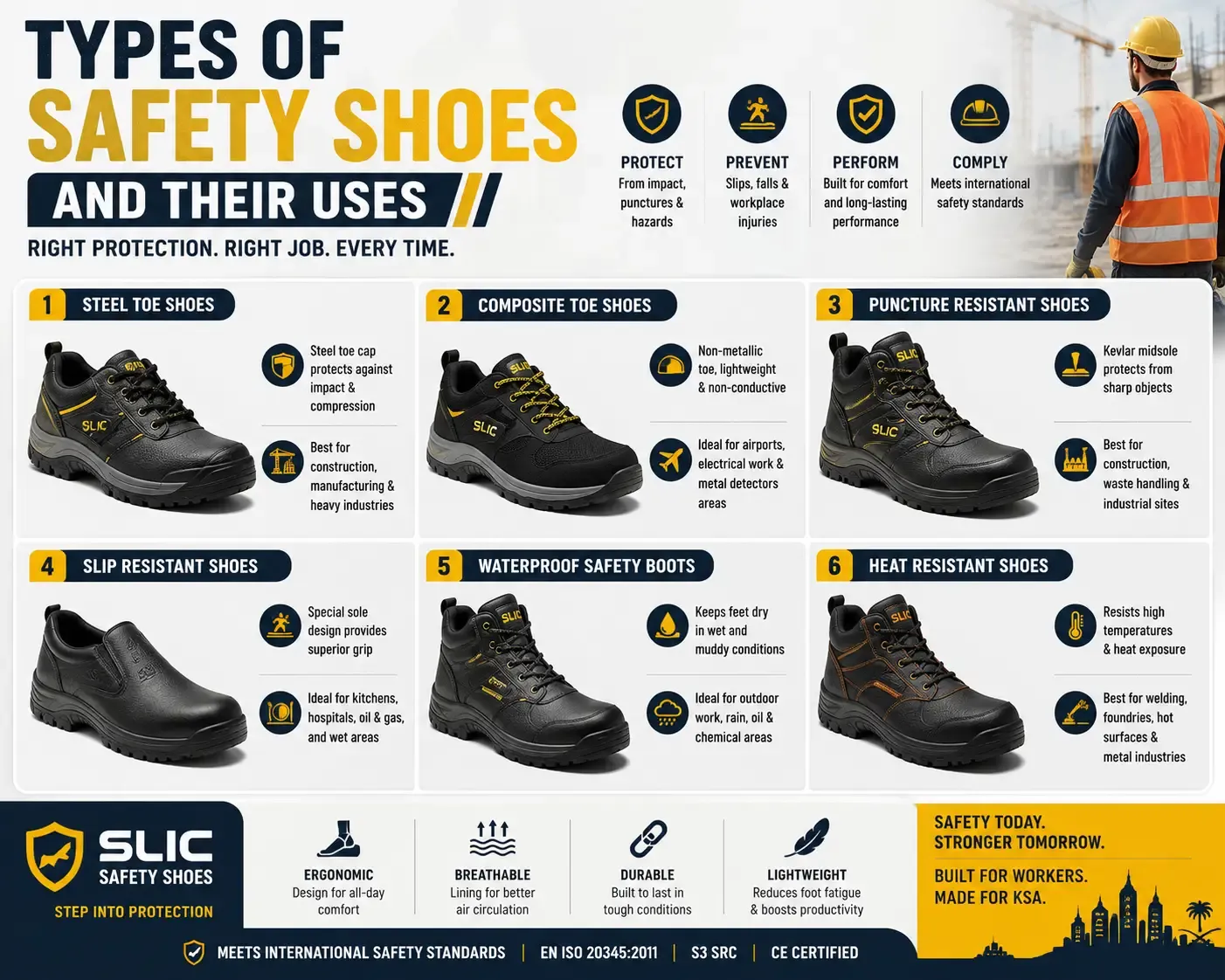
The Ultimate Workplace Guide to Types of Safety Shoes and Their Uses
Safety shoes are an essential part of personal protective equipment (PPE), helping protect workers from a wide range of workplace hazards. From construction sites and factories to warehouses, laboratories, and electrical installations, the right footwear can significantly reduce the risk of injuries while improving comfort and productivity. Understanding the types of safety shoes and their uses makes it easier to choose footwear that matches specific job roles, working environments, and safety requirements. In this guide, we'll explore the most common types of safety shoes, their key features, ideal applications, and tips for selecting the best option for your workplace.
Why Understanding the Types of Safety Shoes Matters
Choosing the right safety footwear is about more than simply meeting workplace requirements. Different jobs expose workers to different hazards, and wearing the wrong type of footwear can reduce protection, increase discomfort, and even lead to workplace injuries. Understanding the types of safety shoes and their uses helps workers and employers select footwear that provides the right level of safety, comfort, and performance for each task.
Better Protection Against Workplace Hazards
Every work environment presents unique risks. Construction workers may face falling objects, electricians deal with electrical hazards, and warehouse employees often work on slippery floors. Selecting the appropriate type of safety shoe ensures protection against the specific dangers encountered on the job.
Improved Worker Safety
Safety shoes are designed to minimize the risk of injuries such as crushed toes, puncture wounds, slips, burns, and electrical shocks. Matching the footwear to the work environment helps create a safer workplace and reduces the likelihood of accidents.
Greater Comfort Throughout the Day
Employees often spend long hours on their feet. Choosing the right safety shoes based on the job role provides better cushioning, support, and breathability, helping reduce fatigue and improve overall comfort during extended shifts.
Increased Productivity
Comfortable and well-fitted safety shoes allow workers to move confidently and perform their tasks more efficiently. Reduced discomfort and fewer foot-related injuries can contribute to higher productivity and improved job performance.
Compliance with Workplace Safety Requirements
Many industries require workers to wear safety footwear that meets recognized standards and is appropriate for specific hazards. Understanding the different types of safety shoes helps employers equip their workforce with footwear that supports compliance and workplace safety programs.
Cost-Effective Purchasing Decisions
Buying the wrong type of safety shoe can lead to frequent replacements, reduced durability, and unnecessary expenses. Selecting footwear that matches the working conditions helps maximize the lifespan of the shoes and provides better long-term value.
Better Performance in Different Environments
Different safety shoes are engineered for different conditions, including:
-
Construction sites with heavy materials
-
Manufacturing plants with moving machinery
-
Warehouses with smooth concrete floors
-
Electrical installations
-
Oil and gas facilities
-
Food processing environments
-
Outdoor work exposed to heat, water, or rough terrain
Choosing footwear designed for these environments improves both safety and performance.
Supports Long-Term Foot Health
High-quality safety shoes provide proper arch support, cushioning, and shock absorption, helping reduce foot pain, muscle fatigue, and joint strain. Over time, the right footwear can contribute to better posture and lower the risk of repetitive stress injuries.
Helps Employers Build a Safer Workplace
When employers understand the types of safety shoes and their uses, they can provide workers with footwear that matches each role and workplace hazard. This proactive approach helps reduce injuries, improve employee confidence, and create a stronger culture of workplace safety.
Understanding the different types of safety shoes is the first step toward making informed decisions that protect workers, improve comfort, and support productivity across a wide range of industries.
Types of Safety Shoes and Their Uses
Safety shoes are available in different designs, each developed to protect workers from specific workplace hazards. Understanding the types of safety shoes and their uses helps employers and employees choose the right footwear for maximum protection, comfort, and performance.
1. Steel Toe Safety Shoes
Steel toe safety shoes feature a reinforced steel cap that protects the toes from heavy falling objects and compression injuries. They are among the most widely used safety shoes across industrial sectors.
Best for:
-
Construction
-
Manufacturing
-
Warehousing
-
Mining
-
Oil and gas
-
Heavy engineering
2. Composite Toe Safety Shoes
Composite toe shoes use non-metallic materials such as fiberglass, carbon fiber, or Kevlar® instead of steel. They provide excellent protection while being lighter and more comfortable for extended wear.
Best for:
-
Electrical work
-
Airport security areas
-
Logistics
-
Utility services
-
Indoor industrial environments
3. Alloy Toe Safety Shoes
Alloy toe shoes use lightweight metals such as aluminum or titanium to provide strong protection with less weight than traditional steel toe footwear.
Best for:
-
Manufacturing
-
Automotive industry
-
Warehousing
-
Workers seeking lighter protective footwear
4. Slip-Resistant Safety Shoes
These shoes feature specially designed outsoles that improve traction on wet, oily, or slippery surfaces, helping reduce slips and falls.
Best for:
-
Food processing
-
Restaurants
-
Healthcare
-
Warehouses
-
Cleaning services
-
Hospitality
5. Electrical Hazard (EH) Safety Shoes
Electrical hazard safety shoes are designed to reduce the risk of electrical shock by providing additional insulation from live electrical circuits.
Best for:
-
Electricians
-
Utility workers
-
Maintenance technicians
-
Construction electrical teams
6. Puncture-Resistant Safety Shoes
These shoes include a protective midsole made from steel or composite materials that helps prevent nails, sharp metal, glass, and other objects from penetrating the sole.
Best for:
-
Construction
-
Demolition
-
Roofing
-
Waste management
-
Recycling facilities
7. Waterproof Safety Shoes
Waterproof safety shoes help keep feet dry while maintaining protection in wet environments. They improve comfort during outdoor work and adverse weather conditions.
Best for:
-
Outdoor construction
-
Agriculture
-
Utilities
-
Landscaping
-
Marine environments
8. Heat-Resistant Safety Shoes
Heat-resistant footwear is designed to withstand high temperatures while protecting workers from hot surfaces and industrial heat exposure.
Best for:
-
Foundries
-
Steel manufacturing
-
Asphalt paving
-
Welding
-
Glass manufacturing
9. Chemical-Resistant Safety Shoes
These shoes are manufactured using materials that resist damage from chemicals, oils, solvents, and other hazardous substances.
Best for:
-
Chemical plants
-
Laboratories
-
Pharmaceutical facilities
-
Petrochemical industries
10. Anti-Static (ESD) Safety Shoes
Electrostatic discharge (ESD) safety shoes help dissipate static electricity, protecting both workers and sensitive electronic equipment.
Best for:
-
Electronics manufacturing
-
Data centers
-
Semiconductor production
-
Precision assembly
11. Metatarsal Safety Shoes
Metatarsal safety shoes provide additional protection over the upper foot, helping reduce injuries caused by heavy falling objects.
Best for:
-
Steel fabrication
-
Heavy construction
-
Mining
-
Metalworking
12. High-Ankle Safety Boots
High-ankle safety boots offer extra support around the ankle, improving stability on uneven terrain while reducing the risk of sprains.
Best for:
-
Construction
-
Oil and gas
-
Mining
-
Infrastructure projects
-
Outdoor industrial work
Quick Comparison Table
|
Type of Safety Shoe |
Primary Protection |
Common Uses |
|
Steel Toe |
Impact and compression |
Construction, manufacturing |
|
Composite Toe |
Lightweight toe protection |
Electrical work, logistics |
|
Alloy Toe |
Lightweight impact protection |
Automotive, warehousing |
|
Slip-Resistant |
Prevents slips and falls |
Food service, healthcare |
|
Electrical Hazard |
Electrical insulation |
Electrical installations |
|
Puncture-Resistant |
Protects against sharp objects |
Construction, demolition |
|
Waterproof |
Keeps feet dry |
Outdoor work, utilities |
|
Heat-Resistant |
High-temperature protection |
Welding, foundries |
|
Chemical-Resistant |
Chemical exposure |
Laboratories, chemical plants |
|
Anti-Static (ESD) |
Static electricity control |
Electronics manufacturing |
|
Metatarsal |
Upper foot protection |
Heavy industry, mining |
|
High-Ankle Boots |
Ankle support and stability |
Construction, oil and gas |
Choosing the right option from the many types of safety shoes and their uses depends on your job role, workplace hazards, and industry requirements. By selecting footwear that matches your working environment, you can improve safety, reduce the risk of injuries, and stay comfortable throughout the workday.
How to Choose the Right Type of Safety Shoes
With so many types of safety shoes and their uses, selecting the right pair can seem overwhelming. The best choice depends on your work environment, the hazards you face, and the level of protection required for your job. By evaluating a few key factors, you can find safety footwear that offers the ideal combination of protection, comfort, and durability.
Assess Your Workplace Hazards
Start by identifying the risks in your work environment. Different hazards require different types of protection.
For example:
-
Falling objects: Choose steel toe, alloy toe, or composite toe safety shoes.
-
Sharp objects on the ground: Select puncture-resistant footwear.
-
Wet or oily floors: Opt for slip-resistant safety shoes.
-
Electrical hazards: Wear electrical hazard (EH) safety shoes.
-
Chemical exposure: Choose chemical-resistant footwear.
-
High temperatures: Select heat-resistant safety shoes.
Matching your footwear to your workplace hazards is the first step toward preventing injuries.
Consider Your Industry
Each industry has unique safety requirements. Choosing footwear designed for your profession ensures better performance and compliance.
|
Industry |
Recommended Safety Shoe |
|
Construction |
Steel toe, puncture-resistant, high-ankle boots |
|
Manufacturing |
Steel toe or alloy toe, slip-resistant |
|
Warehousing |
Composite toe or steel toe, slip-resistant |
|
Oil & Gas |
Heat-resistant, steel toe, waterproof |
|
Electrical |
Electrical hazard (EH), composite toe |
|
Food Processing |
Slip-resistant, waterproof |
|
Chemical Industry |
Chemical-resistant safety shoes |
|
Electronics |
Anti-static (ESD) safety shoes |
Choose the Right Toe Protection
Toe protection is one of the most important features of safety footwear.
-
Steel Toe: Maximum durability and impact protection for heavy-duty work.
-
Composite Toe: Lightweight, metal-free, and ideal for electrical environments.
-
Alloy Toe: Strong protection with less weight than steel.
Select the option that best suits your daily tasks and workplace requirements.
Think About Comfort
Workers often wear safety shoes for eight to twelve hours a day. Look for features that improve comfort, including:
-
Cushioned insoles
-
Shock-absorbing midsoles
-
Breathable lining
-
Lightweight construction
-
Flexible outsole
-
Proper arch support
Comfortable footwear helps reduce fatigue and supports productivity.
Check Safety Certifications
Always choose safety shoes that comply with recognized standards such as ISO 20345 or other applicable workplace safety regulations. Certified footwear has been tested to provide reliable protection under demanding working conditions.
Select the Right Sole
The outsole should match your work environment.
Consider features such as:
-
Slip resistance
-
Oil resistance
-
Heat resistance
-
Chemical resistance
-
Abrasion resistance
A durable outsole improves traction and extends the lifespan of the footwear.
Ensure the Correct Fit
A properly fitting safety shoe enhances both protection and comfort.
When trying on safety shoes:
-
Wear your usual work socks.
-
Ensure your heel fits securely.
-
Leave enough room for your toes to move naturally.
-
Walk around to check for pressure points or discomfort.
An incorrect fit can lead to blisters, fatigue, and reduced stability.
Balance Price with Long-Term Value
The least expensive option isn't always the best investment. High-quality safety shoes often last longer, provide better comfort, and offer superior protection, making them more cost-effective over time.
Buy from Trusted Suppliers
Purchase safety footwear from reputable manufacturers or authorized PPE suppliers to ensure you receive genuine, certified products backed by quality assurance and warranty support.
Make an Informed Choice
Understanding the types of safety shoes and their uses allows you to select footwear that matches your workplace hazards, industry requirements, and comfort needs. The right pair not only protects your feet but also improves confidence, productivity, and long-term safety on the job.
Read:
FAQ
1. What are the main types of safety shoes and their uses?
The most common types of safety shoes and their uses include steel toe, composite toe, alloy toe, slip-resistant, electrical hazard (EH), puncture-resistant, waterproof, heat-resistant, chemical-resistant, anti-static (ESD), metatarsal, and high-ankle safety shoes. Each type is designed to protect workers from specific workplace hazards.
2. Which type of safety shoe is best for construction?
Construction workers typically benefit from steel toe or composite toe safety shoes with slip-resistant outsoles, puncture-resistant midsoles, and high-ankle support. The right choice depends on the site's hazards and the worker's specific role.
3. What is the difference between steel toe and composite toe safety shoes?
Steel toe shoes use a reinforced steel cap for maximum impact and compression protection, making them ideal for heavy-duty industries. Composite toe shoes use non-metallic materials such as fiberglass or carbon fiber, offering similar protection while being lighter and better suited for electrical work and security-sensitive environments.
4. Are safety shoes mandatory in the workplace?
In many industries, yes. Employers often require workers to wear safety footwear as part of their personal protective equipment (PPE) to comply with workplace safety regulations and reduce the risk of injuries.
5. How do I choose the right safety shoes?
Choose safety shoes based on your job role, workplace hazards, industry requirements, comfort needs, and safety certifications. Factors such as toe protection, slip resistance, puncture resistance, waterproofing, and electrical hazard protection should match your working environment.
6. What safety standard should safety shoes meet?
Look for safety footwear that complies with recognized standards such as ISO 20345 or any applicable national regulations. Certified safety shoes are tested to provide reliable protection against workplace hazards.
7. How long do safety shoes last?
The lifespan depends on the quality of the footwear, working conditions, and maintenance. High-quality safety shoes typically last 12 to 24 months, while those used in demanding environments may require earlier replacement.
8. Can safety shoes be comfortable for all-day wear?
Yes. Modern safety shoes are designed with ergonomic features such as cushioned insoles, breathable linings, shock-absorbing midsoles, and lightweight materials to improve comfort during long working hours.
9. How should I maintain safety shoes?
Clean them regularly, allow them to air dry naturally, inspect them for damage, replace worn insoles when needed, and store them in a cool, dry place. Proper maintenance helps extend their lifespan and maintain their protective performance.
10. Why is it important to understand the types of safety shoes and their uses?
Understanding the types of safety shoes and their uses helps workers and employers select footwear that matches specific workplace hazards. Choosing the right safety shoes improves protection, enhances comfort, supports compliance with safety standards, and contributes to a safer and more productive work environment.
Conclusion
Understanding the types of safety shoes and their uses is essential for creating a safer and more productive workplace. Every job comes with unique risks, and selecting the right safety footwear helps protect workers from injuries caused by falling objects, sharp materials, slippery surfaces, electrical hazards, chemicals, and extreme temperatures.
Rather than choosing safety shoes based solely on appearance or price, it's important to consider factors such as workplace hazards, industry requirements, comfort, durability, and compliance with recognized safety standards. Investing in the right type of safety shoe not only improves protection but also enhances comfort, reduces fatigue, and supports better performance during long working hours.
Whether you work in construction, manufacturing, oil and gas, logistics, warehousing, healthcare, or any other industry, selecting the appropriate safety footwear is a key part of an effective personal protective equipment (PPE) program.
SLIC offers a comprehensive range of high-quality safety shoes designed to meet the needs of modern workplaces. From steel toe and composite toe models to slip-resistant, waterproof, and specialized protective footwear, SLIC provides reliable solutions that combine safety, comfort, and durability.
Explore SLIC's collection today to find the right option for your industry and workplace. By understanding the types of safety shoes and their uses, you can make informed decisions that improve worker safety, increase productivity, and deliver long-term value for your business.
- Hits: 103
