Oil and gas safety footwear price: Complete B2B Procurement Guide
Selecting the right safety footwear for oil and gas operations requires evaluating various factors that influence the overall cost. Assessing the oil and gas safety footwear price goes beyond initial purchase figures, as site specifications, international safety certifications, and procurement choices shape overall budget efficiency. This guide explores pricing ranges, key technical drivers, and cost-effective direct procurement options for Saudi enterprise sites.
What Actually Drives the Oil and gas safety footwear price?
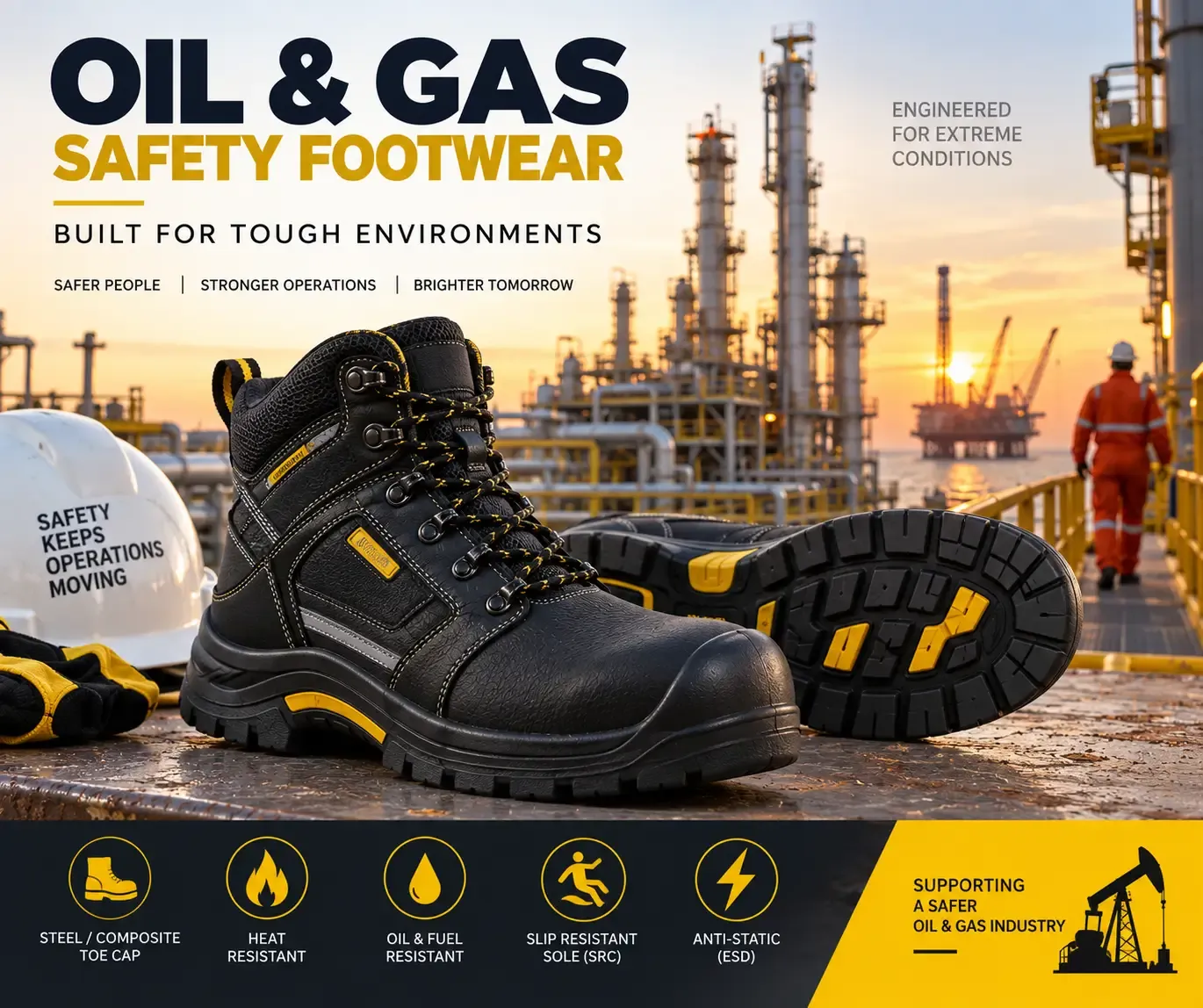
Understanding the oil and gas safety footwear price comes down to evaluating raw materials and specialized safety compliance ratings. Rigorous field conditions,such as exposure to crude oil, drilling muds, sharp steel structures, and intense desert heat,demand heavy-duty construction that raises production costs.
Key engineering and commercial drivers influencing overall pricing include:
-
S3/S7 Certification & Water Protection: Full penetration resistance against liquid hydrocarbons, oil, and water requires premium treated full-grain leather and sealed membrane linings.
-
Extreme Heat Outsoles (HRO): Outsoles engineered with heavy-duty nitrile rubber capable of resisting contact heat up to 300°C significantly increase material costs compared to basic polyurethane (PU) soles.
-
Puncture & Toe Protection: Composite non-metallic or heavy-duty steel toe caps paired with Kevlar or steel midsoles add necessary hazard resistance.
-
Compliance Approvals: Obtaining official Aramco GI 8.005, SASO, and EN ISO 20345 certifications involves costly laboratory testing and continuous quality audits.
Price Bands: What You Actually Get at Each Level
Categorizing the oil and gas safety footwear price into clear market tiers allows procurement teams to balance worker safety needs against annual operational budgets.
Market pricing tiers generally divide into three performance categories across the Middle East:
-
Basic/Entry Tier (120–220 SAR): Standard S1P/S3 safety boots with basic steel toes and dual-density PU outsoles. Suitable for light logistics, basic site visits, or short-term contractor support.
-
Mid-Range/Local Factory Tier (220–380 SAR): High-spec S3 HRO boots produced by established local manufacturers like SLIC. Features oil-resistant nitrile rubber, SASO certification, and heavy-duty leather built specifically for rig site hazards without import markups.
-
Premium Import Tier (450–850+ SAR): Imported western safety brands featuring specialized anti-fatigue footbeds and international brand prestige. However, high tariff costs and distributor margins inflate the end price significantly.
Read more: Guide to Steel Toe Safety Shoes
Unit Price Is Not Landed Cost
Evaluating the true oil and gas safety footwear price requires looking past the initial invoice tag to assess long-term operational expense. A lower upfront unit price can easily lead to higher overall expenditure if boots wear out prematurely under harsh desert conditions.
Essential factors affecting the true landed cost of safety footwear include:
-
Shipping & Import Tariffs: Foreign safety boots incur ocean freight fees, customs duties, and multi-tier distributor markups before reaching local Saudi job sites.
-
Durability & Replacement Frequency: Cheaper, non-certified boots often suffer outsole hydrolysis or seam failure within months, doubling annual re-order cycles.
-
Local Warranty & Stock Access: Sourcing directly from local Saudi manufacturers like SLIC eliminates long shipping delays, reduces emergency inventory storage costs, and secures direct replacement support.
-
Site Non-Compliance Fines: Substandard boots that fail safety audits lead to costly downtime or site access rejections by safety inspectors.
Read more: Guide to SASO Certified Safety Shoes
Cost Per Worker Per Year: The Number Procurement Should Model
Evaluating the true oil and gas safety footwear price requires calculating the total annual expenditure per employee rather than focusing on initial purchase tags. Cheap import boots often degrade within 4 to 6 months due to harsh drilling muds and heat, forcing multiple replacements per year.
Procurement officers can optimize long-term annual budgets by evaluating these simple cost factors:
-
Footwear Lifespan: A higher-quality, oil-resistant boot lasting 12+ months saves 30% to 50% annually compared to replacing cheap boots twice a year.
-
Workplace Injury Prevention: Premium slip resistance and puncture protection prevent costly lost-time injuries and workers' compensation claims.
-
HSE Audit Compliance: Certified boots prevent field access delays, saving companies from costly operational downtime during site inspections.
Read more: Guide to Steel Toe Safety Shoes for Construction Workers Ksa
Wholesale and Bulk Pricing: MOQ, Tiers and Sample Policy
Securing a favorable oil and gas safety footwear price during bulk procurement depends on leveraging Minimum Order Quantities (MOQs) and requesting factory wear samples. Buying directly in volume unlocks tiered wholesale discounts that significantly lower per-unit costs for large enterprise projects.
Essential bulk purchasing strategies for B2B procurement managers include:
-
Volume Pricing Tiers: Ordering higher volume brackets (e.g., 100+, 500+, or 1,000+ pairs) reduces the unit price by 25% to 40%.
-
On-Site Sample Testing: Leading manufacturers provide wear-test samples to verify durability and worker comfort under real field conditions before signing contract agreements.
-
Flexible MOQs: Partnering with local factories allows smaller contractors to access bulk wholesale rates without committing to massive warehousing inventories.
Sourcing from Saudi Arabia: Proximity, Compliance and Re-order Speed
Evaluating your oil and gas safety footwear price options leads directly to local Saudi manufacturing. Buying safety boots straight from local producers like SLIC gives corporate buyers maximum budget control and instant site delivery without overseas trade markups:
-
Direct Factory Wholesale Savings: Cut out foreign agent fees and middleman markups to secure genuine factory-direct rates on high-volume orders.
-
Rapid Regional Fulfillment: Receive urgent site orders and seasonal re-orders in days from our local Dammam facility instead of waiting weeks for ocean freight.
-
Certified Aramco & SASO Compliance: Avoid costly site delays with boots fully certified to SASO, EN ISO 20345 (S3/S7), and Aramco GI 8.005 standards.
-
Heavy-Duty Direct-Injection Soles: Advanced polyurethane and rubber direct-injection construction prevents sole separation in tough drilling muds and oil spills.
-
Free Field Test Samples: Access physical wear-test samples for your site HSE officers to test real-world durability before signing major purchasing contracts.
Contact our B2B procurement team today at +966138121066 to request technical data sheets, schedule on-site footwear wear tests, and lock in factory-direct bulk pricing.
Read more: Guide to Types of Safety Shoes and Their Uses
Specification Checklist Before You Request a Quote
Gathering key site requirements before contacting vendors ensures an accurate oil and gas safety footwear price quote and prevents purchasing non-compliant gear. B2B procurement managers should clarify core technical criteria prior to issuing a Request for Quotation (RFQ):
-
Safety Standard Ratings: Specify if your job site requires S3, S7, or basic S1P standards, including puncture-resistant steel/Kevlar midsoles and toe protection.
-
Specialized Outsoil Features: Confirm if workers encounter extreme surface heat (requiring HRO 300°C nitrile rubber) or heavy oil and chemical spills.
-
Waterproofing & Upper Materials: Determine if field conditions require full-grain water-resistant leather or breathable membrane linings for wet drilling environments.
-
Compliance Certification: Ensure the vendor provides valid test documentation for SASO, EN ISO 20345:2022, and Aramco GI 8.005 approvals.
-
Order Quantities & Sizing Breakdown: Prepare accurate workforce size distributions and total pair quantities to secure the best volume wholesale discount.
Submitting clear specifications allows local Saudi manufacturers like SLIC to provide precise factory-direct pricing, custom specs, and fast wear-test samples tailored to your operational hazards.
FAQ
How do oil field drilling muds affect outsole durability over time?
Synthetic drilling fluids and crude oil break down low-grade rubber soles, making oil-resistant nitrile rubber outsoles essential to prevent swelling and cracking.
What is the difference between S3 and S7 safety ratings in oil and gas boots?
Both offer steel toes and puncture protection, but S7 provides enhanced full-foot waterproof submersion testing, making it ideal for wet offshore drilling platforms.
Why are non-metallic composite toe caps preferred over steel in offshore rigs?
Composite toes do not conduct extreme heat or cold, will not trigger security metal detectors, and eliminate spark risks in volatile gas environments.
How often should rig workers replace their safety footwear under severe field conditions?
Heavy daily exposure to drilling fluids and high desert heat typically requires replacing safety boots every 8 to 12 months to maintain full SASO compliance.
Can anti-static safety boots be used in high-risk explosive refineries?
Refineries with volatile gas pockets require Electrostatic Discharge (ESD) certified footwear rather than standard anti-static boots to ensure rapid, controlled static dissipation.
Conclusion
Optimizing your corporate oil and gas safety footwear price strategy comes down to balancing certified field protection with smart procurement. Investing in heavy-duty boots compliant with SASO, EN ISO 20345, and Aramco GI 8.005 standards protects your workforce against extreme site hazards while preventing costly operational downtime.
Sourcing directly from local Saudi producers like SLIC eliminates expensive foreign trade markups, secures factory-direct pricing, and ensures rapid fulfillment to keep your energy sites fully compliant and operational.
- Hits: 23
