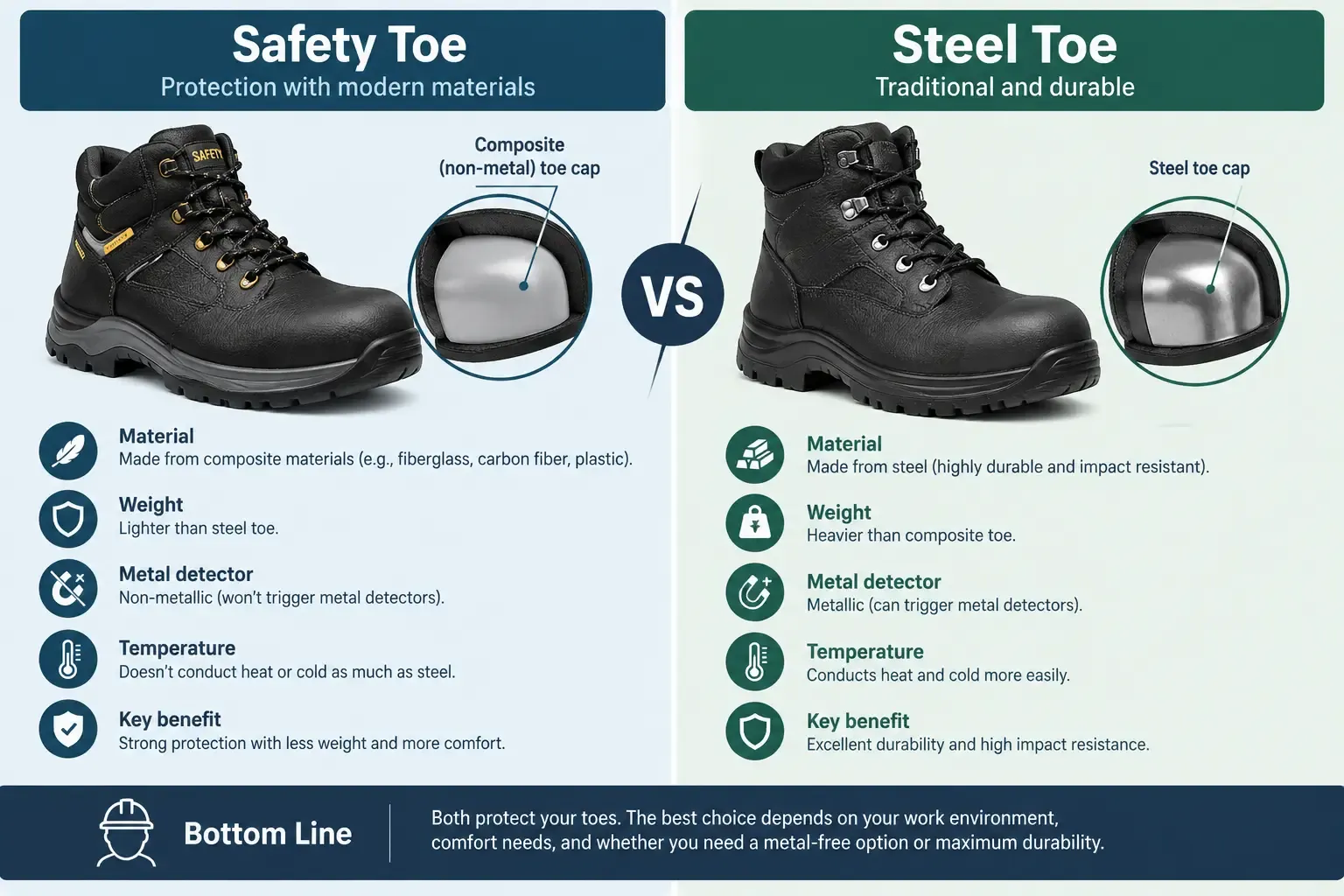
Safety Toe vs Steel Toe - The Ultimate Comparison for Work Boots
Evaluating safety toe vs steel toe footwear is essential for procurement managers looking to protect teams across Saudi Arabian job sites. Industrial work environments present diverse hazards, from heavy equipment drops to electrical risks and extreme desert heat. Understanding how protective cap materials differ enables enterprise buyers to balance certified safety, worker comfort, and long term procurement budgets effectively.
First, a Terminology Correction: Safety Toe Is the Category?
Comparing safety toe vs steel toe requires understanding that a safety toe is the general umbrella term for protective footwear caps, while steel toe refers to one specific material type used inside that cap. Safety toe caps include steel, composite materials, and aluminum, all designed to guard workers against heavy falling objects and impact hazards.
Here is how the basic terminology breaks down for buyers:
-
Safety Toe Category: The broad group term covering all protective toe caps regardless of whether they are made from metal or non metallic compounds.
-
Steel Toe Subtype: A specific type of safety toe made from hardened steel alloy, known for offering traditional heavy duty impact resistance with a compact profile.
-
Composite Toe Subtype: A non metallic safety toe made from high strength materials like carbon fiber, fiberglass, or kevlar that does not conduct heat or electricity.
-
Aluminum Toe Subtype: A lightweight metal safety toe option that provides certified impact protection while keeping total shoe weight low.
Read more: Guide to the Best Saudi Made Safety Shoes
Do Different Toe Cap Materials Offer Different Protection?
All certified safety toe caps (steel, composite, alloy) must pass the exact same baseline safety standards, such as resisting a 200 Joule impact and 15 kilonewtons of compression. However, different materials behave differently under extreme conditions:
-
Extreme Compression Behavior: Steel bends under extreme force beyond certified limits (trapping the foot), whereas composite materials shatter under catastrophic over-capacity loads (allowing foot clearance).
-
Thermal Protection: Steel conducts cold and intense desert heat directly into the toe box, while composite caps act as thermal insulators to keep the foot at a stable temperature.
-
Electrical Hazards: Steel conducts electricity, whereas composite materials are completely non conductive and safe for electrical hazard environments.
Safety toe vs steel toe
Understanding the differences in safety toe vs steel toe options helps buyers choose the exact right foot protection for their workplace environment. While steel toes represent the traditional heavy duty choice, composite and alloy safety toes offer lightweight and non conductive alternatives for specialized industrial sites.
|
Comparison Feature |
Steel Toe Caps |
Composite Toe Caps |
Alloy / Aluminum Toe Caps |
|
Material Composition |
Hardened carbon steel alloy |
Fiberglass, carbon fiber, or plastic |
Lightweight aluminum or titanium alloy |
|
Weight on Foot |
Heavier, ideal for stationary site work |
Up to 30 percent lighter for long shifts |
Very light with a slim profile |
|
Impact Protection |
Meets 200 Joules rating with maximum puncture resistance |
Meets 200 Joules rating with shatter resistance |
Meets 200 Joules rating with thin metal walls |
|
Thermal Insulation |
Conducts hot and cold temperatures into the boot |
Excellent insulator against freezing cold and desert heat |
Conducts heat and cold like steel |
|
Electrical Safety |
Conducts electricity, requires special static build |
Non conductive, perfect for electrical hazards |
Conducts electricity, requires insulated design |
|
Metal Detector Use |
Sets off security scanners at site checkpoints |
Passes through security metal detectors easily |
Sets off security metal detectors |
|
Best Job Site Fit |
Heavy construction, metal fabrication, demolition |
Power plants, airports, cold storage, oil rigs |
Light manufacturing, logistics, warehouse work |
Contact SLIC technical safety specialists today at +966138121066 to evaluate your job site requirements, request sample test pairs, and receive direct manufacturer price quotes for your entire workforce.
Read more: How to Get the Best Slip resistant work shoes ksa price
Alloy Toe: The Middle Option
Evaluating safety toe vs steel toe choices leads many buyers to explore alloy toe caps as a balanced middle ground between traditional steel and composite materials. Alloy toes are crafted from lightweight metals such as aluminum or titanium, offering strong impact resistance with less physical bulk.
Here are the primary features that make alloy toe footwear a popular selection:
-
Lighter Than Steel: Alloy caps are up to 30 percent lighter than traditional steel caps, helping reduce leg fatigue during long walking shifts across large facilities.
-
Sleeker Toe Box Profile: Because alloy metals are thin yet strong, they allow for a less bulky shoe design while still meeting required impact safety thresholds.
-
Full Certification Standards: Just like steel options, certified alloy toes withstand the mandatory 200 Joules of impact energy to keep toes safe from falling objects.
-
Metal Sensitivity Limitations: Since alloy caps contain real metal, they conduct electricity and heat, and they will trigger security metal detectors at site checkpoints.
The Myth That Could Get Someone Hurt
Clearing up dangerous misconceptions about safety toe vs steel toe performance is crucial for maintaining real job site safety. A common myth among workers suggests that steel toe caps will bend under extreme pressure and cut off a person's toes during severe heavy impact events.
Here is the truth every safety officer and procurement manager must know:
-
Extremely High Test Standards: Certified safety footwear undergoes rigorous laboratory compression testing under 15 kilonewtons of crushing force to ensure the toe box maintains adequate clearance for the foot.
-
How Materials Respond: Under forces far exceeding certified safety limits, steel caps may slowly bend inward, whereas non metallic composite caps shatter under extreme catastrophic loads.
-
Real Threat Is Impact Energy: The primary threat in severe crushing accidents is the massive falling weight itself, not the protective cap material acting as a cutting blade.
-
Crucial Takeaway for Buyers: Both steel and composite caps offer certified life saving protection, making proper safety compliance far more important than relying on unverified myths.
Read more: Oil and gas safety footwear price
Toe Caps in Saudi Heat: Thermal Conductivity on Site
Managing the safety toe vs steel toe dynamic in extreme desert working conditions requires paying close attention to thermal conductivity. In high temperature environments across Saudi Arabia, metal toe caps and non metallic caps react very differently to direct outdoor heat, directly affecting worker foot health and daily comfort.
Here is how different toe cap materials perform under intense outdoor heat:
-
Metal Heat Transfer: Steel and aluminum toe caps conduct heat rapidly, transferring outdoor ambient temperatures and direct solar heat directly into the toe box of the shoe.
-
Thermal Insulation: Non metallic composite caps made from fiberglass, carbon fiber, or high density plastic act as natural thermal insulators, blocking heat from penetrating into the shoe.
-
Worker Comfort and Health: Insulated composite toe caps keep worker feet significantly cooler, reducing sweating, blisters, and foot fatigue during long summer shifts.
-
Long Outdoor Shifts: For teams working outdoors in direct sunlight, choosing thermal insulated safety toes prevents heat buildup and supports higher daily worker productivity.
As a trusted pioneer in Saudi manufacturing since 1981, SLIC engineers protective footwear specifically built to withstand the harshest desert climates. SLIC provides advanced heat resistant and thermal insulated composite safety shoes that keep workers cool and protected during extreme summer conditions. By offering immediate local stock, factory direct pricing, and rapid delivery across the Kingdom, SLIC guarantees that corporate clients get the exact high performance footwear needed to maintain productivity and safety on any Saudi job site.
Contact SLIC technical sales team today at +966138121066 to evaluate heat resistant footwear options, request physical samples, and secure direct factory price quotes.
Read more: Guide to Aramco Approved Safety Shoes in Saudi
How to Tell if Your Boots Are Steel Toe or Composite Toe?
Distinguishing between safety toe vs steel toe features in your current workforce inventory is simple when you know what technical details and quick tests to check. Identifying cap materials ensures your workers carry the right compliance rating for their specific work zone.
Use these simple methods to verify your safety footwear cap material:
-
Check the Tongue Label: Inspect the official safety tag sewn inside the shoe tongue for safety codes like EN ISO 20345 or ASTM standards indicating steel or non metallic composite specs.
-
Use a Magnet: Touch a strong magnet to the outside of the toe cap area; a strong magnetic attraction confirms steel, while no magnetic pull indicates composite or non metallic alloy.
-
Feel the Weight: Lift the boot to compare weight, as steel toe shoes feel noticeably heavier in the front, whereas composite shoes maintain a balanced weight throughout.
-
Test with Security Scanners: Pass the shoes through a standard security metal detector; steel and alloy caps trigger an alarm signal, while composite caps pass through without setting off security sensors.
Choosing by Job Role
Selecting between safety toe vs steel toe options depends heavily on the daily responsibilities and working environments of your workforce. Procurement managers and safety officers achieve better safety compliance and team satisfaction when they match specific toe cap materials directly to job duties:
-
Heavy Construction and Demolition Workers: Steel toe footwear provides the maximum puncture protection and heavy impact resistance required when handling heavy machinery, falling masonry, or sharp metal scrap on active building sites.
-
Oil Rigs, Refineries, and Chemical Plant Technicians: Non metallic composite toe footwear is essential in environments with high electrical hazards, flammable gases, or explosive atmospheres, as composite materials will not create sparks or conduct electricity.
-
Airport Staff, Security Personnel, and Logistics Crews: Composite toe shoes allow workers to pass through site security checkpoints and metal detectors smoothly without causing constant alarms or delays during daily shifts.
-
Cold Storage and Outdoor Asphalt Crews: Composite toe caps serve as effective thermal insulators, protecting workers from extreme heat or freezing cold temperatures that metal toe caps conduct into the shoe.
Read more: Oil and gas safety footwear price
As a trusted pioneer in Saudi manufacturing since 1981, SLIC provides an extensive range of safety footwear tailored to meet every job role across industrial sectors. SLIC delivers fully certified steel and composite safety shoes built to withstand harsh local environments while offering immediate local stock, flexible bulk pricing, and full regulatory compliance for your entire organization.
Do Toe Caps Expire? Replacing Footwear After an Impact?
Yes, Internal toe caps effectively expire after experiencing a severe impact or heavy compression event. Even if the outer leather looks completely undamaged, the internal structure becomes compromised and cannot guarantee safety against future impacts:
-
Hidden Internal Damage: Composite toe caps develop micro fractures inside the material structure after an impact, while steel toe caps suffer permanent metal fatigue that weakens their future load capacity.
-
Loss of Certified Protection: A previously impacted toe cap will no longer meet official EN ISO 20345 or SASO safety standards during subsequent workplace accidents.
-
General Material Degradation: Even without an impact, daily exposure to industrial chemicals, extreme Saudi heat, moisture, and midsole wear degrades protective integrity over time, making routine replacement every 6 to 12 months standard safety practice.
Read more: Esd safety shoes saudi arabia price
FAQ
What is the primary difference between a Safety toe vs steel toe?
A safety toe is the broad category for all protective toe caps, whereas a steel toe is a specific subtype made from hardened steel alloy. Other subtypes include composite materials and aluminum alloys.
Are composite safety toe shoes as strong as traditional steel toe boots?
Yes, Both certified steel and composite toe caps undergo the exact same testing procedures to pass the mandatory 200 Joules impact rating and 15 kilonewtons compression limit under EN ISO 20345 standards.
Can composite toe boots trigger airport or site security metal detectors?
No, Composite toe shoes are completely non metallic, allowing workers to pass through site security checkpoints, airports, and power plants without setting off metal detector alarms.
Which toe cap material is best suited for electrical hazard environments?
Composite toe caps are non conductive and non magnetic, making them the safest option for electricians, power plant technicians, and utility crews working near live electrical circuits.
How does extreme Saudi heat affect steel toe boots compared to composite boots?
Steel toe caps conduct external heat rapidly into the shoe, raising inner temperature and discomfort. Composite toe caps act as thermal insulators, keeping worker feet cooler in direct desert heat.
When should safety shoes be replaced after experiencing a heavy workplace impact?
Safety shoes must be replaced immediately after any heavy impact or crushing event. Internal micro fractures or structural metal fatigue weaken the cap, rendering it unsafe for future protection.
Conclusion
Selecting the right safety footwear depends entirely on matching specific job site hazards with the appropriate protective cap, comparing safety toe vs steel toe options. Steel toe caps deliver traditional heavy duty impact resistance for construction and demolition work, while composite toe caps offer lightweight, non conductive, and thermal insulated protection for electrical hazards and extreme heat environments. Selecting fully certified footwear ensures total worker protection, regulatory compliance, and maximum operational efficiency across all industrial sites.
- Hits: 5
